


Intro:
Marko Femc is a runner, triathlete, wine and podcast enthusiast – best known as the director of Plan-net Avto and Plan-net Solar. For over 15 years he has helped shape the future of sustainable energy and mobility in the region. Under his leadership, Plan-net Solar became a leading solar company in Slovenia, Croatia and Serbia, and Plan-Net Solar was also among the first to support the Let’s Play Tennis (LPT) project and its social impact goal. For Mr. Femc, sport is a powerful foundation for a healthy relationship with oneself, life and work.
The interview:
How do you understand collaboration in business?
As a core value. There’s an old saying: if you want to go fast, go alone; if you want to go far, go together. We must look at relationships and business holistically—true collaboration should be good for everyone, not just “me.” Personal maturity and self-respect matter. If you feel “all-knowing,” a kind of Donald Trump syndrome, you block real teamwork.
You bought your first Chinese EV back in 2012. When did you first visit China?
In 2009, when we started with photovoltaics. I actually bought my first electric car, a Nissan, while at a training in Germany—I drove it for 15 minutes, loved it, asked for a quote, and a week later it was on my driveway.
A quick, bold decision.
True—but most people overcomplicate: is it worth it, where will I charge, is it too expensive? I believe the technology is so superior that even if it’s not yet fully accessible, that’s not a reason to reject it. Same with photovoltaics in 2008: when I saw a solar roof module I knew we’d build them. No fuel, no maintenance—and it works? My team was against it at first—thousands of excuses.
Why do you think people resist?
It’s human. We self-sabotage against change—a defense mechanism. Emotions are natural; we just need to process and overcome them. Same with robots: the tech is superior, but many are still against it—for now.
What did China teach you about collaboration?
China is different. We in the West are individualists; they are collective. Family and society before “I”. Confucian thinking is long-term, about future generations and cooperation, not exploitation—China is too big to exploit others and keep partners. When President Hu Jintao said China would lead in e-mobility, they committed—and in 15 years they did it. It taught me that everything is possible once you decide.
How many solar plants and chargers has Plan-net Solar built? Which Chinese brands do you import?
We’ve built around 2,000 solar power plants and sold 25,000+ components. We expanded into EVs and are the largest importer of Dongfeng, Hongqi, BAIC; for MG we’re retailers. We invest heavily in educating our network and consumers—fairs, events, demos. Many still reject EVs due to lack of knowledge, so we explain: they’re clean, more advanced and cheaper to run. Subsidies and loans help; in practice, your loan is paid from what you’d spend on fuel. And crucially, the energy can be made in Slovenia, so the money stays here. If you have solar on your roof, you pay no one for energy.

You just opened the first Hongqi showroom in Slovenia.
Yes, on Celovška in Ljubljana—an important milestone for luxury and sustainable mobility in the region.

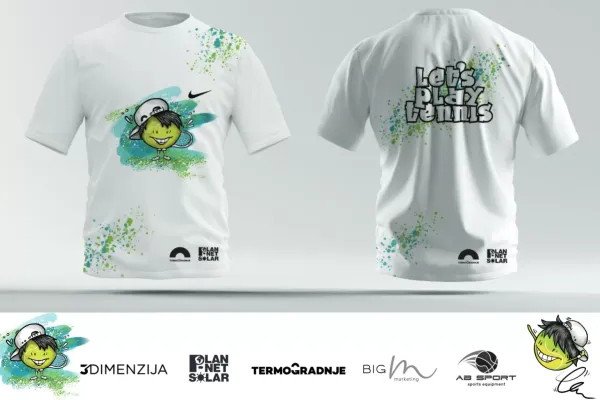
You’re bold in sponsorships too. Plan-net Solar was among the first to support our LPT, which addresses pressure and early specialization in youth sport; 70% of kids drop out before 13. Why is this important to you?
Sport brings goals, routine and discipline. Whether you’re aiming for a national title or the best on your street, you train regularly, repeat drills—in rain, cold or lack of motivation. Sport is relevant for every age because it highlights the right values. Competition is part of sport and can be healthy, but it can also become extreme and push kids out—especially around the transition to secondary school: more study, more travel, less time, more injuries. Training gets harsh after 7–9 years. Extremes can harm the body—even if they show how far we’ll go for dreams.
Dropout also happens because kids are pushed by parents or coaches. Clubs that promote recreational pathways are rare. We support sport because it builds health and is a universal medium for our values.
How do you view sports marketing?
Beyond classic ads, you can choose ambassadors—athletes who share your values. Support can also go to potential future stars. Young audiences speak a different language than corporate. Example: I recently interviewed a candidate who runs workouts on social media with a lifestyle story—hundreds of thousands of followers. If we connect our product with such values, people receive our message differently.
You’re an athlete yourself—one of only three Slovenians to finish the Badwater 135 ultramarathon.
Sport gives me energy, positivity and a need for healthy food—solid foundations to build on. Sometimes I tell myself: if I can run 35 hours in 50°C, I can solve a few more work problems. Repetition is boring, so I added triathlon for a new perspective—the same approach I take at work: more seasons, new branches.

Where do you find inspiration?
I moved from novels to philosophy to psychology—basic literacy for life. Society doesn’t teach it, but it should. I’ve read Musk and Jobs; lately I listen to podcasts while training—music, markets, sports. My rule: Give each day the chance to be the best in your life.
And wine?
Pairing wine and food to create something special is my joy. The more professional an athlete is, the more hours they train, the more quality food they need—more vegetables and fruit, less potatoes, bread, pasta. Many athletes become vegetarian; I’m not, but on weekends I blend a 25-ingredient shake, mostly veggies—another prerequisite for results. You have to “nourish yourself” to follow the strategy. In wine I follow: life is too short to drink bad wine.
The end.


